
Driveway Contractor in Colorado Springs, CO: Matching Your Driveway to Your Walkways
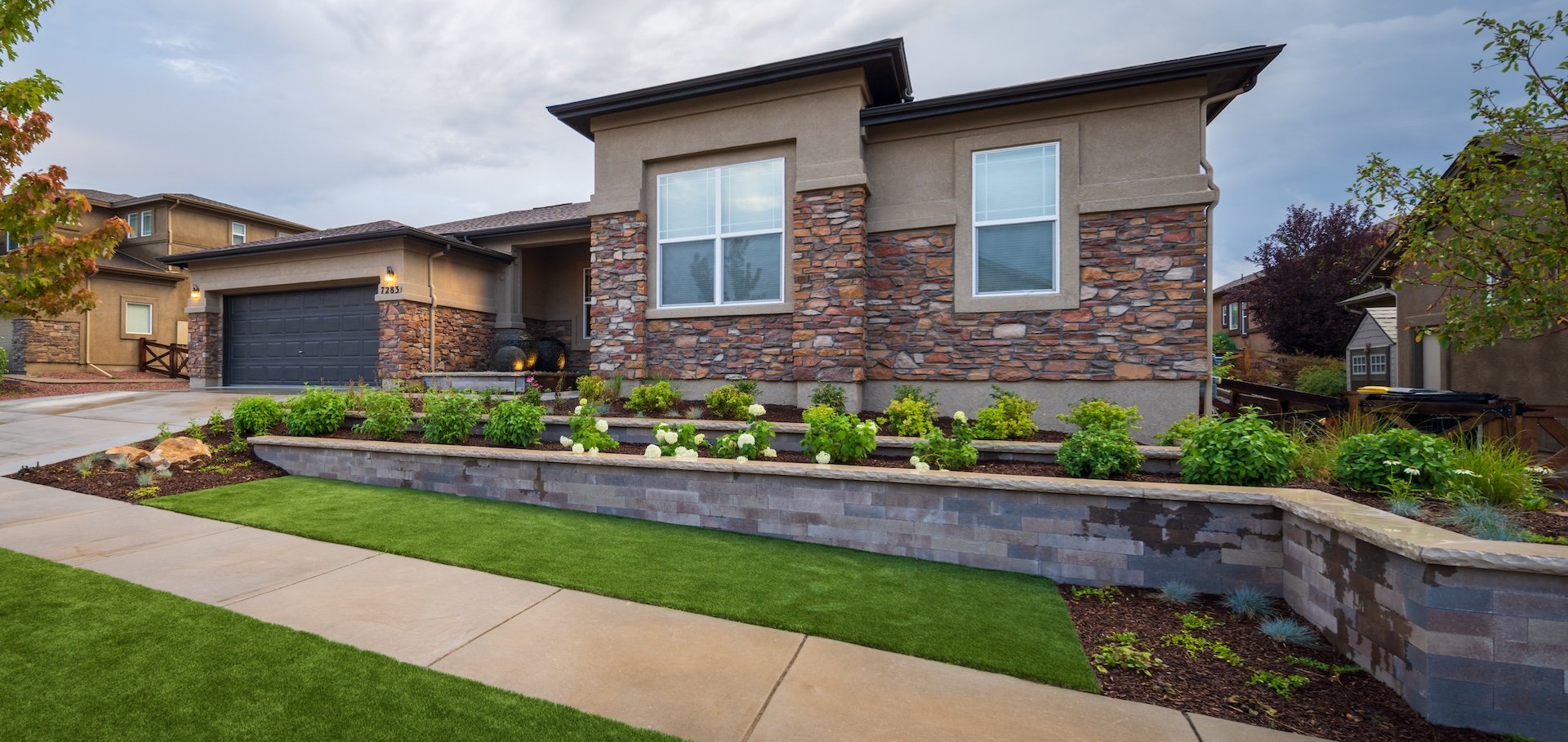
A driveway contractor in Colorado Springs, CO does more than pour or lay a single surface in isolation. Hiner Outdoor Living has designed and built driveways, walkways, and outdoor living spaces across Colorado Springs since 2008.
That experience shapes how the team approaches a driveway project from the start: not as one isolated surface, but as the first piece of a property's overall material story that continues through the walkways, patio, and backyard beyond it.
A driveway that doesn't relate to the walkways around it creates a visually disconnected property, even when each individual surface looks fine on its own. Matching these elements deliberately is what turns separate hardscape features into one cohesive arrival experience.
Why Should a Driveway and Walkway Use the Same Materials?
A property's first impression forms before anyone reaches the front door, starting the moment a car turns into the driveway. A driveway and walkway built from unrelated materials, one in plain concrete and the other in natural stone, reads as two disconnected decisions rather than one intentional design.
Shared materials create a visual through-line that guides the eye from the street to the entrance. This continuity matters most on properties where the driveway curves or the walkway branches off partway, since a shared material palette keeps that transition from feeling abrupt.
This principle applies just as much to color as it does to material type. A driveway and walkway built from entirely different products still feel coordinated if they share a similar tone, while two products from the same manufacturer in clashing colors feel just as disconnected as using unrelated materials.
Matching doesn't require using identical pavers in identical patterns everywhere. A driveway uses a larger-format paver suited to vehicle weight while a walkway uses a complementary size or color from the same material family, keeping the connection visible without ignoring the different functional demands of each surface.
When Full Matching Makes the Most Sense
Properties with a short, direct path from driveway to front door benefit most from close material matching, since the two surfaces sit close enough together that any mismatch reads immediately. Properties with more distance or landscaping between the driveway and entrance have more flexibility to vary materials while still keeping a coordinated color palette.
A curved driveway that passes near a side entrance before reaching the main garage creates multiple points of contact with walkway materials, which makes tight coordination especially important along that entire path rather than just at the front door.
A property with a long, straight driveway set well back from the home has more room to let the driveway read as its own feature, coordinating loosely with the walkway rather than matching it point for point.
Distance between features generally increases design flexibility, since the eye doesn't compare two surfaces directly when they aren't visible in the same glance.
Which Paver and Natural Stone Options Work Well Together?
Concrete pavers offer the widest range of coordinated options, since manufacturers produce driveway-rated and walkway-rated pavers in matching or complementary finishes within the same product line. This makes it straightforward to specify a heavier-duty paver for the driveway and a lighter-duty version of the same style for the walkway.
Natural stone offers a different kind of coordination. Flagstone, for example, varies naturally in color and texture, so a driveway and walkway built from the same stone source read as related without needing to be visually identical, since natural variation is part of the material's character.
That natural variation is actually an advantage for coordination, since two adjacent surfaces cut from the same stone lot never look artificially uniform, which tends to read as more authentic than a perfectly matched manufactured product.
Mixing paver driveways with natural stone walkways, or the reverse, works when the two materials share a similar color temperature and scale. A warm-toned paver driveway paired with a cool-gray stone walkway tends to look like two separate decisions rather than one coordinated plan.
Working With a Belgard Authorized Contractor
Hiner Outdoor Living's status as a Belgard Authorized Contractor gives homeowners access to a full manufacturer product line engineered for exactly this kind of coordination, since Belgard designs driveway and walkway products within the same collections specifically to be used together.
That manufacturer relationship also means access to warranty support and product availability that an unauthorized installer working with the same brand of pavers cannot always guarantee, particularly for matching future additions to an existing installation.
An authorized contractor also carries current knowledge of the manufacturer's full catalog, including options that aren't widely advertised but fit a specific coordination need better than the standard product lineup.
This access matters most for homeowners planning a phased project, since a contractor with an ongoing manufacturer relationship has a better chance of matching a second phase to materials chosen in the first.
How Does Colorado's Climate Affect Material Choice?
Colorado Springs experiences significant freeze-thaw cycling through the winter and shoulder seasons, and that cycling puts real stress on any hardscape surface. Water that gets into small cracks or joints expands when it freezes, which widens those gaps over repeated cycles if the base and material weren't built to handle it.
Properly installed pavers handle freeze-thaw movement better than a single poured concrete slab, since the individual units flex slightly at the joints instead of transferring stress across one continuous surface. This is one reason paver driveways tend to hold up well in this climate when installed on a correctly prepared base.
Concrete slabs, by contrast, rely on control joints to manage that same stress, and those joints eventually crack in unpredictable places if the base beneath them wasn't compacted evenly across the entire surface.
Natural stone varies in freeze-thaw performance depending on the specific stone type and its porosity. A driveway contractor familiar with Colorado's climate selects stone types with proven local performance rather than specifying a material based on appearance alone.
Base Preparation Matters as Much as Material Choice
Regardless of which material a homeowner chooses, the base beneath it does most of the actual work of managing freeze-thaw stress. A properly compacted, well-draining base reduces how much water pools and freezes beneath the surface in the first place, which protects the investment in either paver or natural stone materials above it.
A driveway contractor cutting corners on base preparation to save time on a bid creates a problem that won't surface until after the first few winters, by which point the surface above it has already started to shift or crack.
Asking a driveway contractor to describe their base preparation process in detail, including compaction method and base depth, is a reasonable way to gauge whether that step is getting the attention it needs before construction begins.
A contractor who answers this question specifically, rather than with a general assurance, is more likely to have a consistent, repeatable process behind every installation.
Related: Top Landscaping Trends for Monument and Castle Pines, CO Homes
Can You Match an Existing Driveway When Adding New Walkways?
Matching an existing driveway becomes more complicated once that driveway has weathered for several years, since sun exposure and wear change a material's color and texture over time. A newly installed walkway using the exact same product often looks slightly different from the older driveway simply due to that natural aging.
A driveway contractor experienced with this challenge has a few practical options. Sourcing from the same manufacturer and product line gets closest to a true match, even accounting for some natural weathering difference between old and new material.
Manufacturers sometimes update or discontinue specific paver colors and styles over time, which means a driveway installed a decade ago no longer has an exact match available. A contractor familiar with a manufacturer's history identifies the closest current equivalent rather than guessing.
Choosing a complementary rather than identical material is often the more reliable approach for an older driveway. A walkway that intentionally coordinates with, rather than attempts to exactly replicate, an aged driveway tends to look more deliberate than a near-miss match that highlights the difference.
When Replacing the Driveway Makes More Sense
If a driveway has significant wear, cracking, or settling issues, replacing it alongside new walkway construction sometimes makes more sense than trying to match new walkways to a failing surface. This approach gives a homeowner a genuinely unified material plan instead of building new work around an aging one.
A driveway contractor should evaluate the existing driveway's condition honestly during the initial consultation, rather than defaulting to a match-and-build-around-it approach simply because full replacement costs more upfront.
A homeowner weighing this decision should ask for a clear comparison of both paths: the cost and appearance of matching around an aging driveway versus replacing it entirely as part of one unified project.
Seeing both options laid out side by side, with real cost figures attached to each, makes it much easier for a homeowner to choose confidently rather than defaulting to whichever option was mentioned first.

What Does a Driveway Contractor's Design Process Look Like?
Hiner Outdoor Living's process moves through a defined six-step sequence, starting with an initial consultation to understand the property's layout, the homeowner's priorities, and how the driveway connects to walkways, the entrance, and any backyard hardscape already in place or planned.
Design comes next, where material options get proposed with an eye toward coordinating the driveway with every connected surface rather than designing it as a standalone element. This is the stage where a homeowner sees exactly how proposed materials work together before any construction begins.
Reviewing physical material samples side by side during this stage, rather than relying on photos alone, gives a homeowner a much more accurate sense of how the finished materials will actually look together in daylight on the property.
Material selection, then construction, follow the finalized design. Base preparation happens first in the build phase, since that groundwork determines how well the finished surface performs through Colorado's freeze-thaw seasons regardless of which material was chosen.
Why Sequencing the Design Process Matters
Homeowners planning a driveway project alongside future backyard work benefit from raising that full scope during the initial consultation, even if the backyard portion happens in a later phase. A contractor aware of the complete vision selects driveway materials today that still coordinate with hardscape decisions made a year or two down the road.
Skipping this conversation upfront sometimes leads to a homeowner discovering, years later, that the driveway material chosen without a full-property plan no longer matches the direction a subsequent patio or walkway project took.
A short conversation about long-term property goals during the initial consultation costs nothing and prevents a homeowner from having to work around an earlier, more limited decision later on.
Contractors who ask this question as a standard part of their process, rather than only when a homeowner happens to mention future plans, tend to deliver more consistent results across multi-phase projects.
Choosing a Driveway Contractor Who Thinks Beyond the Driveway
A driveway contractor who treats the driveway as an isolated project misses the opportunity to create a cohesive arrival experience that extends into the rest of the property. A contractor who considers the walkways, entrance, and connected hardscape from the start delivers a result that reads as one unified design rather than a series of separate decisions.
Homeowners throughout Colorado Springs benefit from working with a driveway contractor who asks about the full property vision upfront, not just the immediate driveway scope, since that broader perspective is what prevents a mismatched look down the road.
That upfront conversation costs nothing during a consultation but saves significant time and expense compared to correcting a disjointed material plan after multiple phases of work are already complete.
Schedule a driveway contractor consultation with Hiner Outdoor Living to plan a driveway that coordinates with your walkways and the rest of your property from day one.
In Summary
Should my driveway and walkway use the same materials?
Shared materials create a visual through-line that guides the eye from the street to the entrance, keeping the property from feeling like two disconnected decisions. This matters most on properties where the driveway curves or the walkway branches off partway. Matching doesn't require identical pavers everywhere; a driveway can use a larger-format paver for vehicle weight while a walkway uses a complementary size or color from the same material family.
What paver and natural stone options work well together for a driveway and walkway?
Concrete pavers offer the widest coordination options, since manufacturers produce driveway-rated and walkway-rated pavers in matching or complementary finishes within the same product line. Natural stone offers a different kind of coordination, since flagstone from the same source reads as related without needing to be visually identical. Mixing paver driveways with natural stone walkways works when the two materials share a similar color temperature and scale.
How does Colorado's climate affect driveway material choice?
Colorado Springs experiences significant freeze-thaw cycling, and water that gets into cracks or joints expands when it freezes, widening those gaps over repeated cycles. Properly installed pavers handle this movement better than a poured concrete slab, since individual units flex slightly at the joints instead of transferring stress across one continuous surface. Regardless of material, the base beneath a driveway does most of the actual work of managing freeze-thaw stress.
Can a new walkway match my existing driveway?
Matching becomes more complicated once a driveway has weathered for several years, since sun exposure changes a material's color and texture over time. Sourcing from the same manufacturer and product line gets closest to a true match, though manufacturers sometimes discontinue specific colors and styles. Choosing a complementary rather than identical material is often more reliable for an older driveway than attempting an exact match that highlights the difference.
What does the design process look like for a new driveway?
The process starts with an initial consultation to understand the property's layout and how the driveway connects to walkways, the entrance, and any backyard hardscape. Design follows, proposing material options with an eye toward coordinating the driveway with every connected surface. Material selection and construction come next, with base preparation happening first since that groundwork determines how well the surface performs through Colorado's freeze-thaw seasons.
Related: Experience the Best in Landscaping and Landscape Design for Your Colorado Springs, CO Home
About the Author
Matt Hiner founded Hiner Outdoor Oiving in 2008 with almost 10 years of experience in the landscape industry and the last $300 to his name. Nearly two decades and countless beautiful outdoor living spaces later, the rest is history.